Stainless Steel Kitchen Utensils Sourcing from Yiwu: 304 Verification, MOQ Reduction & Price Benchmarks (2026)
Stainless steel kitchen utensils are the largest sub-category in Yiwu International Trade City, with 8,000+ specialized suppliers across the stainless steel cluster (Chaozhou Caitang + Yongkang + Yiwu aggregation). FOB prices range from $0.10 (promotional stock) to $3.00 (premium sets). Standard MOQ is 500-1,000 pieces for custom logo, though 300 is achievable through multi-supplier comparison. The single biggest quality risk is material fraud — based on hands-on factory audits, approximately 60-70% of products labeled "304 stainless steel" are actually 201, 430, or electroplated 304 over a cheaper base metal.
- Product Types & Sourcing Benchmarks
- 304 vs 201: The Material Truth
- Stainless Steel Industrial Clusters
- Factory Verification: Raw Material Cost Test
- Sourcing Channels Compared: Alibaba vs Factory vs Agent
- Compliance & Quality Inspection
- Common Pitfalls & Scams
- Multi-Material Sourcing Results: Real Client Cases
- Why Choose Milebond for Your Sourcing
- FAQ & Free Sourcing Analysis
- Amazon FBA seller sourcing stainless steel utensils at $1-$10 unit cost
- Need MOQ 300-500 with custom logo or packaging
- Been burned by "304" products that rusted
- Want to verify if your supplier is a real factory or trader
- Looking to reduce lead time, improve payment terms, or optimize packaging
- You need high-end electronics or precision medical devices
- Your order quantity is below 100 pieces (too small for factory pricing)
- You expect a sourcing agent to work for free (transparent fees apply)
- You want the absolute cheapest product regardless of quality or compliance
1. Product Types & Sourcing Benchmarks
Stainless steel kitchen utensils in Yiwu cover a wide range of product types, each with different price points, MOQ requirements, and quality risks. Below are the most common categories sourced by Amazon FBA sellers, with realistic FOB price ranges and standard MOQs based on actual supplier quotes in Yiwu market.
| Product Type | FOB Price Range | Standard MOQ | Lead Time | Key Quality Risk |
|---|---|---|---|---|
| Stainless steel utensils (spoons, forks, spatulas) | $0.10 - $1.50 | 500-1,000 pcs | 25-35 days | Material fraud (201 as 304) |
| Stainless steel racks & holders (canning, dish, corner) | $0.50 - $3.00 | 300-500 pcs | 20-30 days | Welding quality, rust at joints |
| Stainless steel pots & pans (stock pots, saucepans) | $1.50 - $8.00 | 300-500 pcs | 30-45 days | Bottom thickness, coating compliance |
| Stainless steel gadgets (peelers, graters, measuring cups) | $0.20 - $2.00 | 500-1,000 pcs | 20-30 days | Sharpness, edge finishing, material |
| Stainless steel sets & bundles (utensil sets, cookware sets) | $2.00 - $10.00 | 300-500 sets | 30-40 days | Mixed materials in set, packaging damage |
Prices are FOB Yiwu/Ningbo for reference only. Actual quotes depend on order quantity, customization, material grade, and supplier. Prices collected from Yiwu International Trade City, September 2026.
Other Kitchen Utensil Materials
This guide focuses on stainless steel. For other material categories, see our dedicated sourcing guides:
Note: Material-specific guides are published as separate category pages. Links activate as each page goes live.
2. 304 vs 201: The Material Truth
The most common scam in stainless steel kitchen utensil sourcing is material fraud. Suppliers label products as "304 stainless steel" but use cheaper 201, 430, or even electroplated iron. The difference is invisible to the naked eye but dramatically affects durability, rust resistance, and food safety compliance.
| Property | 304 Stainless Steel (Genuine) | 201 Stainless Steel (Common Substitute) | Electroplated 304 (Worst Case) |
|---|---|---|---|
| Chromium content | 18-20% | 16-18% | Base metal may be 0% |
| Nickel content | 8-10.5% | 1-1.5% (or none) | Only in plating layer |
| Rust resistance | Excellent (indoor use) | Moderate (rusts in humid/salty env) | Poor (plating wears off, base rusts) |
| Food contact safety | FDA / LFGB compliant | May fail heavy metal migration (Mn) | Fails once plating chips |
| Material cost (per kg) | ~¥18-22/kg | ~¥10-14/kg | ~¥5-8/kg (base metal) |
| Magnetic test result | Non-magnetic (or weakly magnetic after forming) | Magnetic | Magnetic (base metal) |
3 Ways to Verify 304 Before Mass Production
Drop a stainless steel identification solution on the surface. 304 stays unchanged or turns light yellow; 201 turns red/pink within 30 seconds. Must scrape surface first to bypass plating.
Handheld XRF spectrometer gives exact Cr/Ni/Mn composition. 304 must show Cr ≥18% and Ni ≥8%. Most reliable method. Can rent or hire a testing lab in Yiwu for ~¥200/sample.
5% NaCl salt spray for 48 hours. Genuine 304 shows no rust; 201 shows rust spots within 12-24 hours. Best for final batch verification. Yiwu testing labs charge ~¥300-500/sample.
Reference standards: ASTM A240/A240M (304 composition), ASTM A959 (201 composition). Always verify material on the actual production sample, not just the supplier's provided sample — suppliers often send a genuine 304 sample for approval but use 201 for mass production.
3. Stainless Steel Industrial Clusters
Stainless steel kitchen utensil manufacturing in China is concentrated in two primary clusters, plus Yiwu as an aggregation hub. Sourcing from the correct cluster for your product can reduce cost by 15-30% and improve quality consistency.
| Cluster | Core Products | Key Advantage | FOB Range |
|---|---|---|---|
| Chaozhou Caitang (Guangdong) | Stainless steel utensils, racks, pots | Most complete SS supply chain in China; lowest material cost; fastest tooling | $0.10 - $3.00 |
| Yongkang (Zhejiang) | Stainless steel + hardware, flasks, tools | Low mold cost; flexible for small custom orders; hardware integration | $0.20 - $4.00 |
| Yiwu (Zhejiang) | Aggregation / multi-supplier sets | 8,000+ stainless steel suppliers in one market; compare 20+ suppliers for the same product; small order flexibility | $0.10 - $3.00 |
Other material clusters (Yangjiang for knives, Dongguan for silicone, Taizhou for plastic) are covered in their respective material-specific guides (see links in Section 1).
4. Factory Verification: Raw Material Cost Test
The most reliable way to distinguish a real factory from a trading company is the raw material cost proportion test. A real factory that produces stainless steel utensils will have stainless steel sheet/coil as its largest cost component. A trading company cannot show you material purchase invoices because they don't buy raw material — they buy finished products.
• Labor: 10-15%
• Energy/equipment: 5-8%
• Packaging: 3-5%
• Overhead/profit: 7-17%
2. Check the invoice is from a steel mill (e.g., TISCO, Baosteel, Tsingshan)
3. Verify the buyer name on the invoice matches the supplier's business license
4. Cross-check: material cost ÷ quoted price should be 55-70%
5. If below 40%, it's almost certainly a trading company
5. Sourcing Channels Compared: Alibaba vs Direct Factory vs Sourcing Agent
Before choosing how to source stainless steel kitchen utensils, it's important to understand the tradeoffs between the three primary channels. Each has different strengths, weaknesses, and cost structures.
| Factor | Alibaba / B2B Platform | Direct Factory (Canton Fair / Online) | Sourcing Agent (Yiwu-based) |
|---|---|---|---|
| Supplier options | Thousands, but 70%+ are trading companies | Limited to factories you can find and contact | 20+ verified suppliers per product, pre-vetted |
| Price transparency | Low — inflated for platform commission | Medium — factory quote, but no benchmark | High — 3+ quotes side by side, market benchmark |
| MOQ flexibility | Low — platform suppliers enforce high MOQ | Low — factory minimums rigid | High — multi-supplier comparison can reduce MOQ 50-70% |
| Quality verification | None — buyer responsible | Limited — factory self-certification only | Independent — material test, factory audit, third-party QC |
| Cost | Free to browse, but prices inflated 15-30% | No agent fee, but risk of fraud/mistakes is high | Service fee (typically 5-8%), but savings from optimization often exceed fee |
For small to medium Amazon FBA sellers (MOQ 300-1000, $1-$10 unit cost), a Yiwu-based sourcing agent typically delivers the best combination of price, MOQ flexibility, and quality verification — provided the agent is transparent about fees and does not accept kickbacks from suppliers.
6. Compliance & Quality Inspection
Stainless steel kitchen utensils that come into contact with food must meet specific regulatory requirements in each target market. Non-compliance can result in product recalls, Amazon listing removal, or customs seizure.
| Market | Key Regulation | Test Items for Stainless Steel | Typical Lab Cost |
|---|---|---|---|
| United States | FDA 21 CFR 175.300; California Prop 65 | Heavy metal migration (Pb, Cd, Cr, Ni); overall migration | $300-600 |
| European Union | Regulation (EC) No 1935/2004 | Heavy metal migration; organoleptic test; specific migration limits | €400-800 |
| Germany | LFGB (Food and Feed Code) | Sensory test; chemical migration; 201 stainless steel has stricter Mn limits | €300-500 |
| France | DGCCRF (French consumer protection) | Specific migration of metals; 304 composition verification | €350-600 |
AQL Quality Inspection Standard
For stainless steel utensils, use ANSI/ASQ Z1.4 (equivalent to ISO 2859-1) sampling standard:
| Lot Size | Sample Size (General Level II) | Critical (0 defects) | Major (AQL 2.5) | Minor (AQL 4.0) |
|---|---|---|---|---|
| 500 pcs | 50 pcs | 0 | 3 accept / 4 reject | 5 accept / 6 reject |
| 1,000 pcs | 80 pcs | 0 | 5 accept / 6 reject | 7 accept / 8 reject |
| 3,000 pcs | 125 pcs | 0 | 7 accept / 8 reject | 10 accept / 11 reject |
Critical defects for stainless steel utensils: rust, sharp edges, food safety non-compliance. Major defects: material mismatch (201 as 304), welding defects, dimensional errors >5%. Minor defects: surface scratches, minor packaging damage, logo printing offset.
7. Common Pitfalls & Scams
Supplier sends genuine 304 sample for approval, then uses 201 for mass production. Always test material on production samples, not just approval samples.
Supplier claims to be a factory but is actually a trading company. Use the raw material cost test (Section 4) and verify business license manufacturing scope.
Supplier quotes unrealistically low to win the order, then increases price after deposit or at final payment. Always get 3+ quotes and be suspicious of prices 30%+ below market average.
Some sourcing agents accept 5-15% kickbacks from suppliers, which is built into your price. Ask for transparent fee structure and written confirmation of no kickbacks.
Supplier uses oversized packaging that increases FBA fees and shipping cost. Always calculate dimensional weight and optimize packaging before mass production.
Buyer pays balance before inspection, then receives defective goods. Always do pre-shipment inspection (AQL standard) before paying the balance.
8. Multi-Material Sourcing Results: Real Client Cases
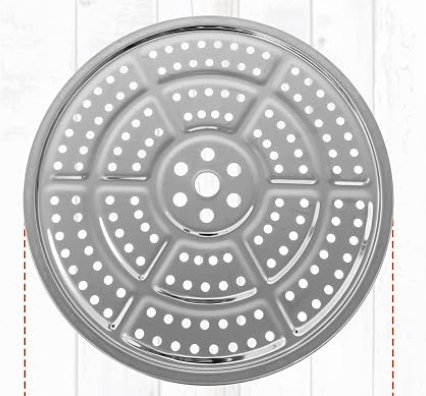
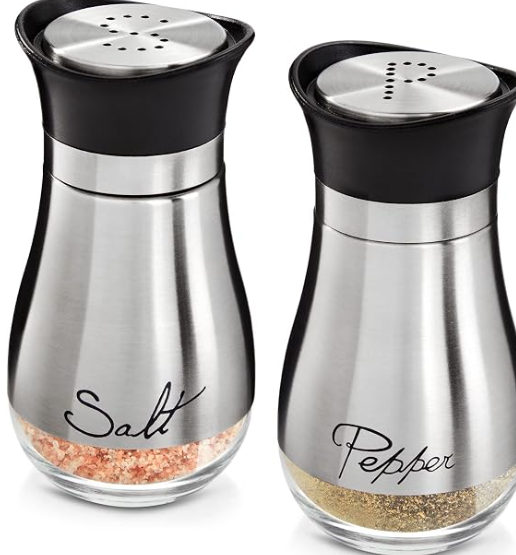
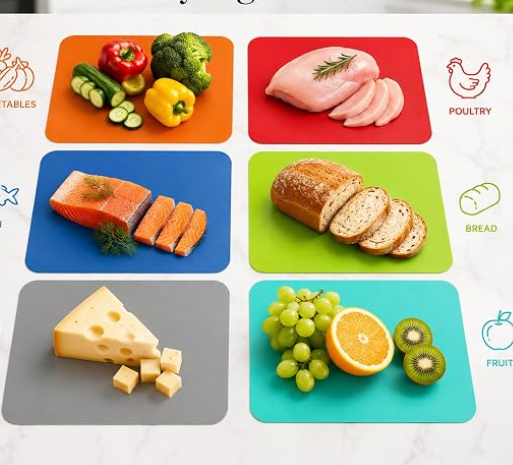
While this guide focuses on stainless steel, these case studies demonstrate sourcing optimization across material types — stainless steel, glass, and food-contact plastic. All results are from actual client projects, not estimates. Client and supplier identities are anonymized.
9. Why Choose Milebond for Your Sourcing
Anyone can quote you a price. Milebond gives you a verifiable supply chain — with real factory audits, material testing receipts, and a fee structure aligned with your savings, not our kickbacks.
Analysis →
10. Frequently Asked Questions
Get a Free Stainless Steel Sourcing Analysis
Send us your product spec, target MOQ, and current supplier quote. We'll provide a free analysis: material verification recommendation, 3 supplier comparisons, MOQ optimization potential, and estimated savings. No obligation, no kickbacks, transparent fees.
Request Free Analysis →Response within 24 hours · No hidden fees · We do not accept supplier kickbacks